The TechnologyBehind OpenNoiseNet
How OpenNoiseNet explores smartphone sensing, private device networks, and a future public noise map
Current Technical Building Blocks
Seven parts of the architecture that are already in motion while the stabilization gate remains open
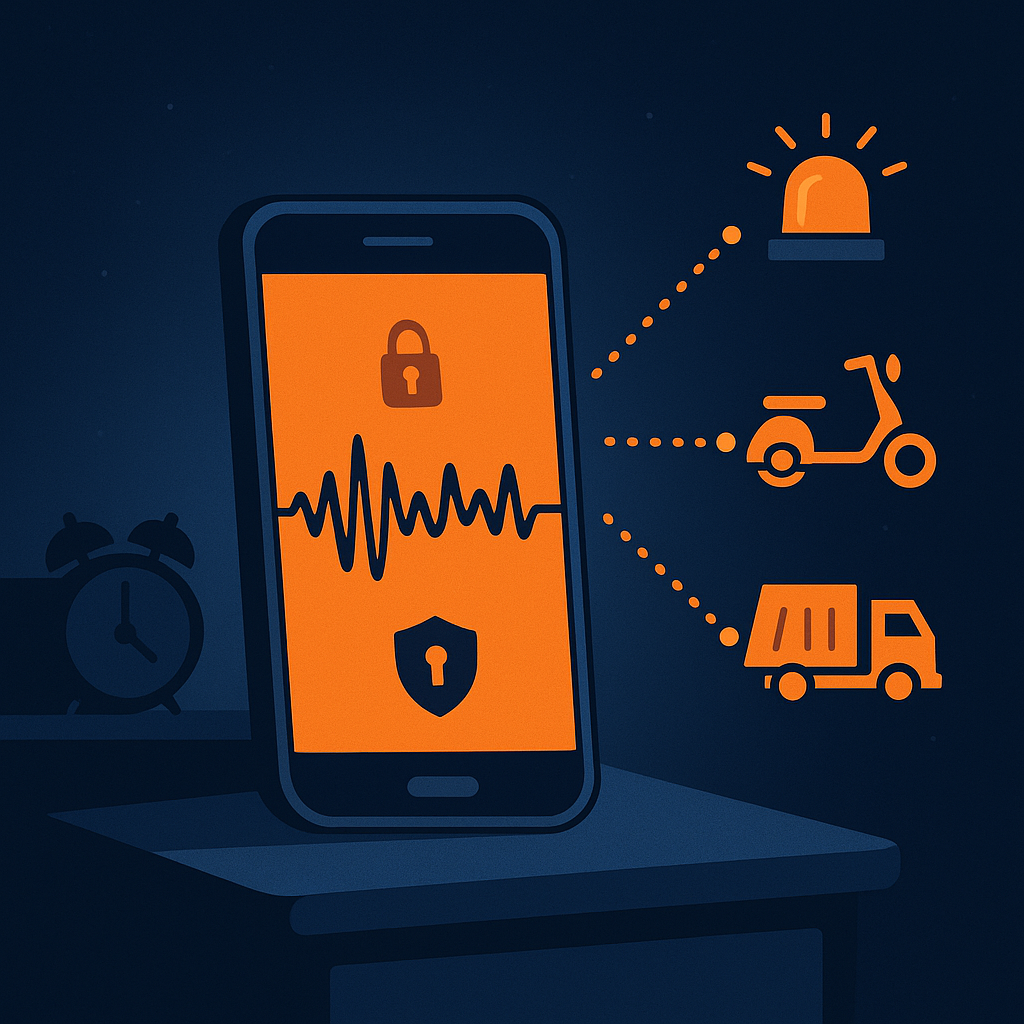
The Field Node
“Smartphone node: capture, queue, recover”
The mobile app is being hardened into a long-running field node with local monitoring, recovery, sync diagnostics, and privacy-first uploads.
Mobile runtime and unattended capture
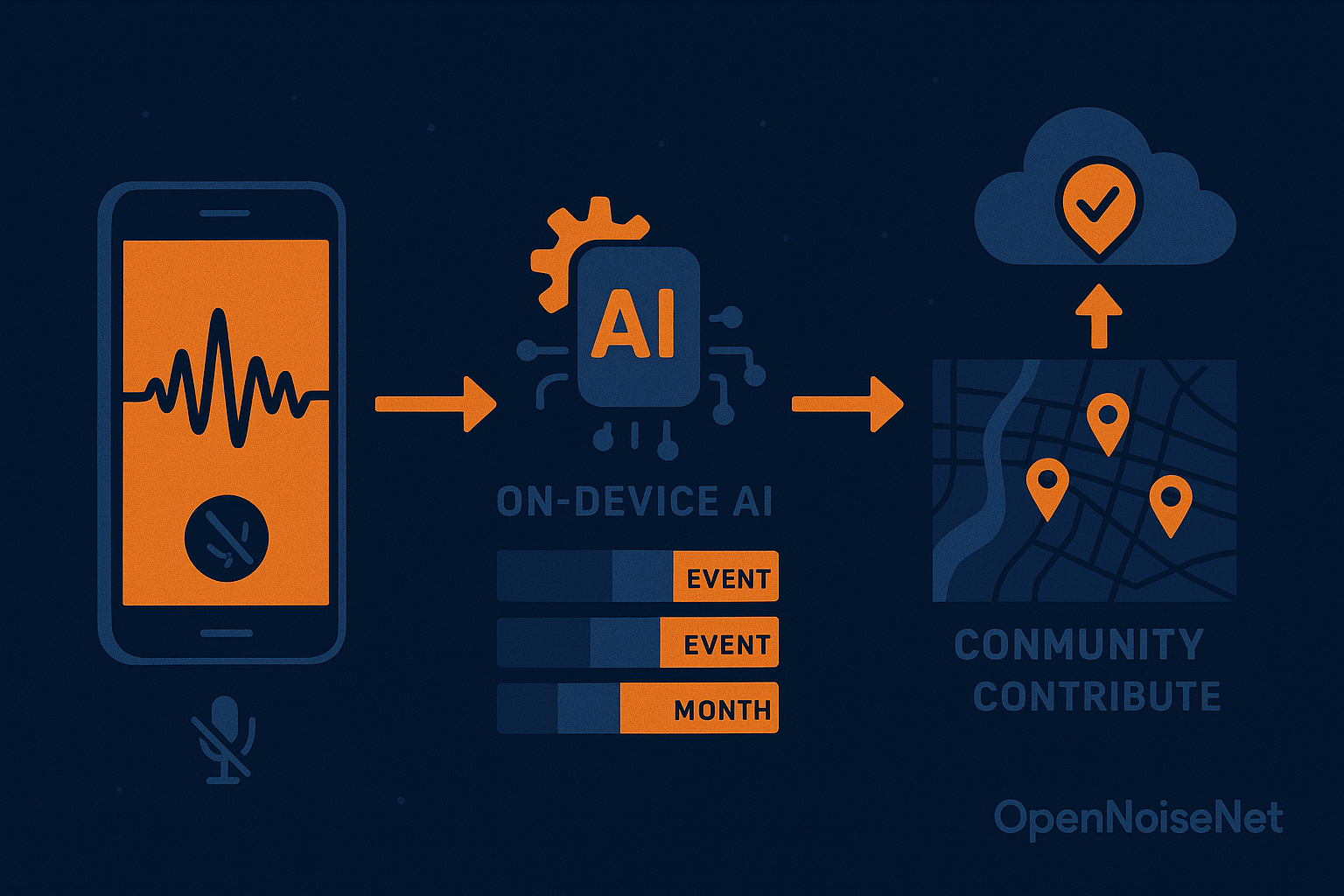
The Derived-First Contract
“Derived-first by default”
OpenNoiseNet keeps numeric levels, lifecycle state, and policy-governed evidence as the default path. Raw audio is not the normal cloud artifact.
Privacy-preserving architecture
The Event Receipt
“event_uuid: detect, queue, upload, ACK”
Stable identifiers, receipts, acknowledgements, and sync diagnostics let reportable events survive reconnects and be traced end to end.
Lifecycle observability and reconciliation
The Episode Engine
“Event stream → episode”
Server-side logic now groups events into episodes with severity, nuisance score, review state, and export lifecycle instead of leaving operators with raw event noise.
Incident construction and review state
A Private Device Network
“One private overview”
A private device network is being tested with connected phones. It is not yet generally available.
Private sensor overview
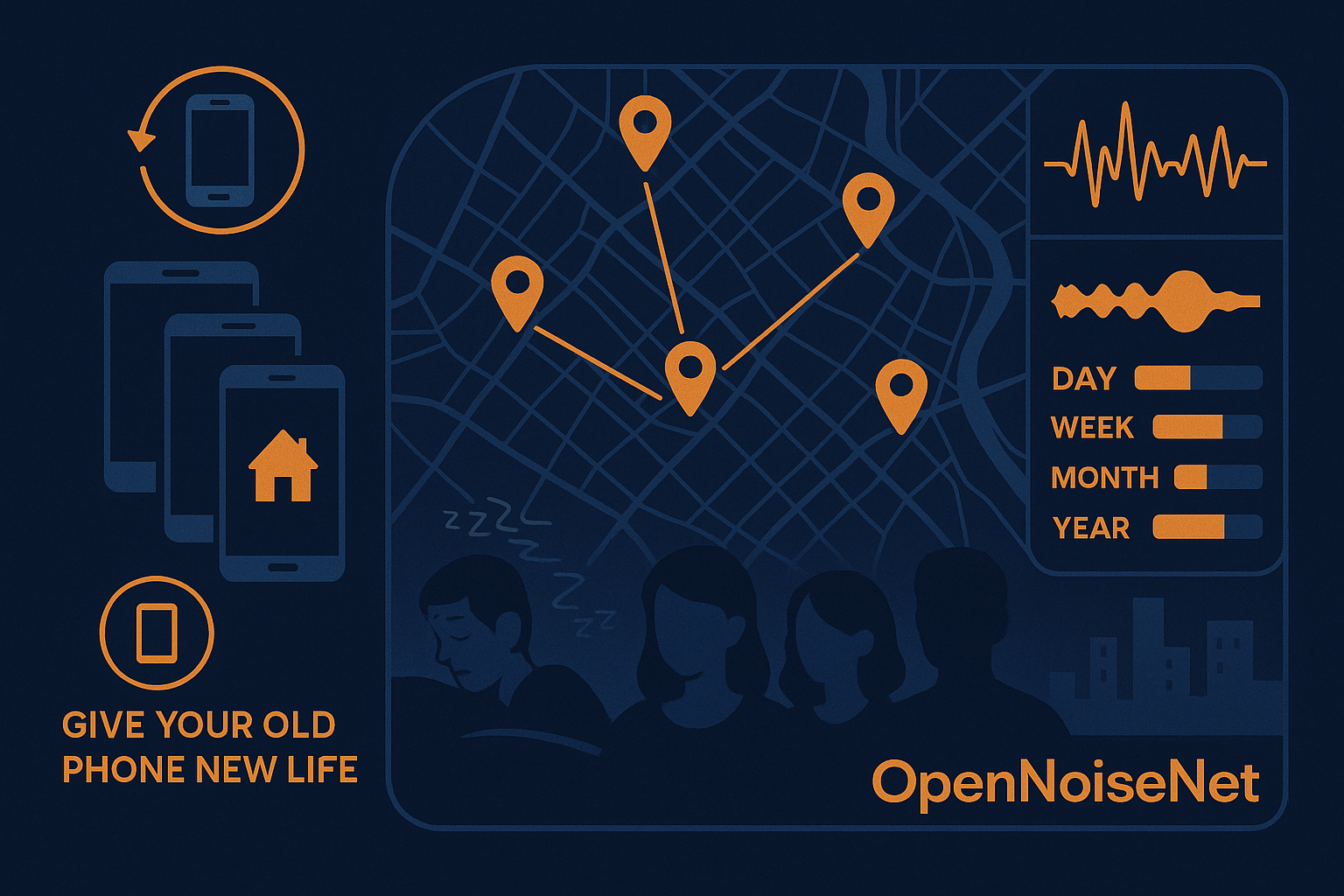
The Public Map
“A shared view of noise”
A free public map is the project vision. It is not yet available.
Community noise reporting
Everyday Reliability
“Testing in real life”
Reliable long-running operation, calibration, and privacy remain important areas of testing.
Validation and transparency
Execution Priorities
A practical view of what is being built and what remains to be tested
Privacy by Design
Sound is analysed on the device. Sharing derived information is a separate choice, and the selected server operator can read data sent to it.
Active Gate
Reliable long-running sensing and the quality of smartphone estimates still require real-world testing.
Help Finish thePlatform
The next steps include testing reliability, calibration, and privacy in everyday use.
Ready to Make an Impact?
Follow the repo, validate the field node, and help make the operator workflow trustworthy enough for early pilots.